Category: General

How Home Financing Options Support Community Growth in Faith-Based and Family-Oriented Neighborhoods

Communities that share values, like faith or family, don’t just happen on their own. They are shaped by the economy, which determines who can afford to live and what gets invested in the neighborhood over time. Home financing options play a role in this. For example, solutions like VA home loans in South Carolina have helped veterans and their families live in communities that reflect their values.

The Connection Between Homeownership and Community Stability

Homeownership has long been associated with community stability, and the research generally supports this intuition. Homeowners tend to stay in communities longer, invest more in local schools and civic institutions, and build deeper relationships with neighbors. In faith-based communities in particular, stable, long-term residents are the backbone of religious institutions, the families who volunteer, lead programs, and pass traditions down to the next generation.

When financing options are accessible and appropriate for the community’s income profile, homeownership rates rise and the virtuous cycle of community investment deepens. When financing is difficult to access or poorly suited to residents’ circumstances, communities struggle to maintain the stability that makes them distinctive and desirable.

VA Home Loans in South Carolina and Their Community Impact

South Carolina has military bases, so a lot of people are veterans or active duty service members. VA home loans give them financing terms, like no down payment requirements and competitive interest rates.

This makes a difference in community formation. Families can buy homes earlier, start building equity and establish roots in communities that align with their values. VA home loans have helped veterans families become a part of neighborhoods across the state.

Faith-Based Communities and Mortgage Accessibility

Many faith-based communities help their members buy homes recognizing that stable housing is important for family wellbeing and community engagement. Churches and religious organizations sometimes partner with lenders to provide financial education, down payment assistance or connections to good loan products.

This kind of community support for homeownership shows that the health of a faith community is connected to the stability of its members. When families are secure in their housing, they can give more, volunteer, and invest in their community.

Family-Oriented Neighborhoods and Long-Term Investment

Neighborhoods with strong family orientation, good schools, parks, safe streets, community organizations, command premium real estate prices, but they’re also where the demand for homeownership is strongest. The families who most want to live in these communities are often those most committed to maintaining and improving them. Supporting their access to homeownership through programs like VA financing or first-time homebuyer assistance programs is an investment in community quality.

Home financing isn’t just a financial transaction, it’s the mechanism through which individuals and families become rooted members of communities. In South Carolina, programs like VA home loans are helping veterans and their families build the kind of stable, values-driven community lives that strengthen neighborhoods and the institutions within them. Understanding these financing options, advocating for their accessibility, and connecting families with the resources they need is a form of community building in itself!

Best Practices for Church Renovations & Expansions

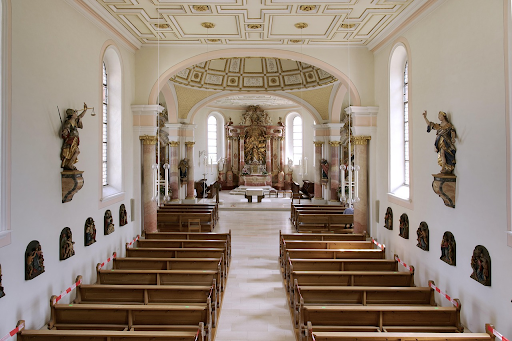
Remodeling and expanding a church goes beyond a building project. It’s a chance to improve the space in which your congregation meets, worships, and grows together. But with major undertakings like that, how do you ensure the project aligns with your vision and your community’s needs? Using sound principles, an area can be a sacred space that looks good, works well, and is built to last. 

Start with a Clear Vision and Purpose  

Each successful church remodel begins with purpose. Ask yourself: what is this project supposed to accomplish? Is it for a growing congregation, preserving historical elements, or increased accessibility? But clearly defining your goals early on will help drive every decision, from design to materials. Also, you’ll want to involve key people, such as church leaders, church members, architects, etc., to help the vision fit the community’s needs.

Preserve the Church’s Unique Character 

Churches are often steeped in history, and retaining their unique character is important. However, while modern upgrades may improve functionality, they should not overrun the building’s spiritual and architectural identity. For example, when replacing tired elements, like vents, consider using flush wood floor vents to keep with the same design. This balance of the old and new keeps the space timeless and current.

Prioritize Accessibility and Inclusivity

As communities become increasingly diverse, this challenges churches: how do they make themselves accessible to all members? Renovations may incorporate features such as wheelchair ramps, wider doorways and accessible restrooms. Include anything that needs to be addressed for those with visual or hearing impairments by the use of technology such as assistive listening devices and appropriate lighting. Being inclusive makes sure that everyone in the church environment feels at home.

Invest in Sustainable and Durable Materials

Even churches are beginning to pay attention to sustainability. Choose sustainable materials that create a minimum environmental effect and are long-lasting and economical. Utility costs, for example, can be reduced over time by using energy-efficient lighting, solar panels, and high-quality insulation. Not only do these decisions save money, but they also show stewardship of resources—which many congregations strongly value.

Plan for Future Growth

Expansion for churches means using the vision of the future. Extrapolate what your space could do for the congregation five, ten, or twenty years into the future. Smart investment means flexible designs, like multipurpose rooms that can be configured to host different types of events. This innovative strategy allows your church to grow without making repeated renovations.

Work with Experienced Professionals

Finding a partner who knows church renovations is vital. Designers, builders, and project managers experienced in sacred spaces know these projects’ challenges. They can help maintain the integrity of the building while still allowing for modern upgrades to comply with safety and building codes. They could save you time, energy, and money.

Engage the Congregation Throughout the Process

Renovations and expansions require community involvement. Keep your congregation up to date and involved throughout the process. Hold meetings, circulate updates, and solicit feedback. This creates a sense of ownership and excitement among its members. When the job is done, it will be a feeling of connection to the space the community helped shape.

Build a Space That Inspires  

Renovating or expanding your church is an impactful project that requires careful planning and execution. Following these best practices will help you create a space that honors your church’s legacy while serving the needs of today’s congregation. Start with a clear vision and work with pros to ensure every detail aligns with your mission. 

Take the first step today—your church’s future starts now.  

Pest Control Strategies for Christians – Is There a Solution for All?

Pests are an unwelcome charge in the homeowners’ garden of Eden, and for the conscientious Christian, the question of dealing with them extends beyond practicality to ponder ethical and spiritual realms. This article is a compassionate plea for the Christian homeowner who seeks to respect nature and still maintain a pest-free zone.

Understanding The Problem

Common household pests, like ants, rodents, and termites, aren’t just a nuisance. They can undermine the physical sanctity of our homes as well as our spiritual peace. These are the proverbial serpents slithering in our well-kept garden, chipping away at the tranquility and integrity of our dwellings. Worse, many traditional pest control methods pose health risks to our kin and environmental threats that linger like the darker aspects of humanity’s fall from grace.

Ethical Perspective On Pest Control

For those who are faithful stewards of the Earth, the ethical struggle is real. The command to subdue the Earth does not imply a free hand in annihilation, clearly. Christians weigh even the tiniest of actions, conscious of their impact. The ethical dilemma arises when the sanctity of life, even those of miniscule creatures, faces the wrath of extermination. After all, the scripture does offer tales of reformation and second chances.

Eco-Friendly Pest Control Strategies

Recognizing that pests are not sinners, but merely errant beings in the elaborate scheme of creation, leads the conscientious homeowner to a path of reconciliation rather than retribution. Here are some eco-friendly strategies to consider:

  • Preventative Measures:

Employing sanctified methods like sealing entry points with caulks, and instituting proper waste management as a form of atonement for the filth that often attracts these harbingers of chaos.

  • Natural Repellents and Deterrents:

In the same way that scripture encourages the casting out of demons, pests too can be exercised from our homes without invoking the same arsenals others might. Contact professionals in pest control in Sarasota, FL for their expert advice. 

  • Biological Control:

Introducing natural predators, such as cats, into the home not only serves as an emblem of hospitality but as a natural deterrent against smaller house pests.

  • Prayer and Prevention Kits:

A playful yet poignant suggestion is the curation of prayer and prevention kits, containing verses that can be recited while ‘saging’ the home with insect-repelling herbs and essential oils.

Finding the balance between the management of pests and the mindful application of control is not only practical but a profoundly spiritual endeavor. 

The conscientious Christian homeowner can indeed draw upon their faith as a foundation to construct a home that is not only pest-free but also free from the guilt that often comes with harsh pest control measures. We hope these strategies provide a bridge between your faith and the stewardship of your home, your sanctum sanctorum in this mortal realm.

Read Our Other Blog: How to Identify and Prevent Leaks in Roof Construction

Understanding The Beliefs Of Baptist Christians

Baptists are Christians who believe in baptism by immersion for the forgiveness of sins. They also believe in the separation of church and state, and the freedom of each individual to choose their own religious beliefs. Baptists are active in missions and evangelism, and there are many Baptist churches in Minnesota.

Who Are Christians

Christians are people who have chosen to follow the teachings of Jesus Christ. Christianity is based on the belief in one God who created the world and all that exists in it. Christians believe in the Bible as the authoritative source of religious teachings. They also believe in the importance of spreading their faith to others through evangelism and missionary work. Christians have a shared set of beliefs in regards to salvation and redemption. They also place a high importance on living a moral life according to the teachings of Jesus Christ. Christians have a wide range of denominations and beliefs within their faith. However, they all share a common belief in the existence of one God and the divine teachings of Jesus Christ. Christians make up a large percentage of the world’s population and can be found in every corner of the globe.

History Of Christianity

Christians have a long and rich history dating back to the time of Jesus Christ. Christianity is one of the largest and most influential religions in the world. Christians believe in the Bible as the authoritative source of religious teachings. They also believe in the importance of spreading their faith to others. Christians have a shared set of beliefs in regards to salvation and redemption. They also believe in the bodily resurrection of Jesus Christ. Christians place a high importance on ethical living and love for others. Christians have had a significant impact on the world through their charitable work, missionary work, and educational institutions. Christianity is a major force in the world today and Christians are some of the most active people in terms of spreading their faith.

How Many Christians Worldwide

Christians have a long and rich history, and there are an estimated 1.2 billion Christians worldwide. Christianity is one of the oldest and most influential religions in the world, with followers all over the globe. Christians believe in the Bible as the authoritative source of religious teachings. Christians also believe in the Trinity, which is the doctrine that states there is one God who exists as three persons: the Father, the Son, and the Holy Spirit. Christians are called to follow Jesus Christ as their personal savior. Christians are also expected to spread the gospel, or good news, of Jesus Christ to others. Christianity is a monotheistic religion, which means Christians believe there is only one God.

Religion is a set of beliefs concerning the cause, nature, and purpose of the universe, especially when considered as the creation of a superhuman agency or agencies, usually involving devotional and ritual observances, and often containing a moral code governing the conduct of human affairs.

What Is Organized Religion

A religion is an organized collection of beliefs, cultural systems, and world views that relate humanity to an order of existence. Many religions have narratives, symbols, and sacred histories that are intended to explain the meaning of life and/or to explain the origin of life or the universe. From their beliefs about the cosmos and human nature, people derive morality, ethics, religious laws or a preferred lifestyle. According to some estimates, there are roughly 4,200 religions in the world.

The word religion is sometimes used interchangeably with “faith” or “belief system”, but religion differs from private belief in that it has a public aspect. Most religions have organized behaviors, including clerical hierarchies, a definition of what constitutes adherence or membership, congregations of laity, regular meetings or services at well managed facilities for the purposes of veneration of a deity or deities, strict codes of ethics, and sometimes a codified system of ritual law. Religions may also contain mythology.

How Did Religion Start?

At the beginning of time, there was no religion. There were just people who believed in different things. They had their own reasons for believing them, but they still didn’t know about Christianity or Christ. Without Christianity, christ (or) to enlighten man, he was lost in his beliefs.

What Are The Most Common Religions?

There are many religions in the world. Christianity is one of them. There are also religions such as Islam, Jehovah’s Witnesses, Mormons, Pagans, and many more.

What Is A Christian Person?

A Christian is someone who believes that Jesus Christ (or) to enlighten man, he was lost in his beliefs. www.wikihow.com/Be-a-Christian. He is God’s son.

Who Is Jesus Christ?

Jesus Christ is the one who God sent to enlighten man, and he was lost in his beliefs. www.wikihow.com/Be-a-Christian. He died on a cross and rose from the dead so all Christians can have salvation.

What Was Jesus’ Mission?

Jesus christ’s mission was to help people on earth believe in good.

What Is The Holy Spirit?

The Holy Spirit is God’s third part. It is the person that Christians must have in their lives to live a Christian life.

Who Are The Apostles?

The apostles were Christ’s helpers or friends on earth who helped him spread Christianity and gave people hope.

Is Religion True Or False?

Religion is a set of beliefs that teach behavior and ways to please God.
Churches Are Also Called Temples? Yes, Christian churches are called temples. They have christ’s church in them too.

How Do You Become A Christian?

You can become a Christian by believing that Christ died for your sins and getting baptized in the faith.